InPharmX Inc., DBA University Learning Systems Phone: 1-800-940-5860 Email: info@universitylearning.com
Professional learning online at a desk
← All on demand pharmacology CE/CME

On demand pharmacology CE/CME

Providing Better Patient Care 2025 - Las Vegas

FormatSelf-paced onlineRecordedJune 10, 2025AccessAvailable now
Log in to register

About this course

Learn at your own pace.

Draft imported from Lecture Panda. Review and replace this description before publishing.

Educational information

Designed for meaningful, practical learning.

Sessions

Session
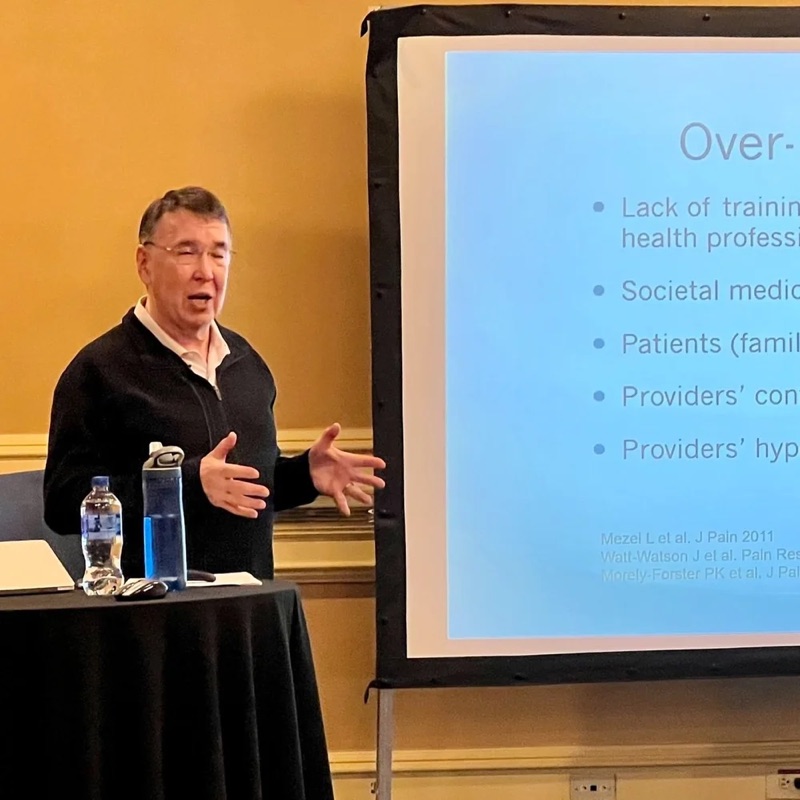
2025-06-10 Pharmacological Strategies to Manage Symptoms of Palliative Care Patients-What Primary Care Providers Need to Know

Tuesday, June 10, 2025

Speaker: Dr. Gregory L. Holmquist Credit hours: 5 ACPE UAN: 0741-0000-25-013-H08-P

Learning objectives
  1. Define what “palliative care” is and state the overall pharmacological goals of palliative care. 2. State common symptoms experienced by palliative care patients with the following diseases: (a) Cancer; (b) COPD; (c) Renal disease; (d) Liver disease; (e) ALS; (f) Parkinson’s disease.
  2. Compare and contrast core pharmacological principles for the use of opioids in palliative care patients versus hospice patients.
  3. Describe best practice for use of common pain medications including agent selection, dosing, titration, routes of administration and common side effects of: Opioids (morphine, methadone, fentanyl, oxycodone, hydrocodone, hydromorphone and buprenorphine) Adjuvants such as NSAIDS, anti-depressants, anticonvulsants.
  4. Propose a pharmacological management strategy for each of the following symptoms: (a) nausea and vomiting (b) dyspnea (c) mental status changes (anxiety, agitation, hallucinations) (d) constipation (e) pruritus (f) insomnia (g) anorexia; cachexia (h) weakness and fatigue (i) muscle spasms.
  5. Cite four general principles for medication optimization (deprescribing) to improve the pharmacological outcomes of palliative care patients.
2025-06-11 Hyperinsulinemia, Insulin Resistance, Targeted Medication and Lifestyle Interventions and The Application of Critical Thinking and Evidence Based Medicine: Reframing Our Approach to Personalize the Management of Type 2 Diabetes

Wednesday, June 11, 2025

Speaker: Dr. Cory Jenks Credit hours: 5 ACPE UAN: 0741-0000-25-014-H01-P

Learning objectives
  1. Illustrate the physiological effects of hyperinsulinemia and insulin resistance in the pathogenesis of type 2 diabetes.
  2. Summarize the evidence for Therapeutic Carbohydrate Restriction (TCR) for peoplewith type 2 diabetes.
  3. Recognize the appropriate management of type 2 diabetes patients with both medication and lifestyle interventions.
  4. Demonstrate the various modes of critical thinking to Type 2 diabetes treatment.
  5. Apply the tools of Evidence Based Medicine to personalize diabetes treatment.

Faculty

Portrait of Dr. Gregory L. Holmquist, ULS faculty member

Dr. Gregory L. Holmquist, PharmD, CPE

Clinical Pharmacist and Pain Educator

A clinician and educator with specialized experience in oncology pharmacy, end-of-life care, pain education, and medication management.


Professional profile ↗
Portrait of Dr. Cory Jenks, ULS faculty member

Dr. Cory Jenks, PharmD, BCPS, BCACP

Ambulatory Care Clinical Pharmacy Specialist · Southern Arizona VA Health Care System

A clinical pharmacist, speaker, and teacher who connects evidence-based care with the adaptability, empathy, and communication skills of improvisation.

Professional profile ↗

Accreditation

Target audience

Pharmacists, Nurse Practitioners, Physicians, Physician Assistants, Nurses

PHARMACISTS

  • University Learning Systems is accredited by the Accreditation Council for Pharmacy Education (ACPE) as a provider of continuing pharmacy education. 
  • These programs are accredited for all pharmacists.
  • This course provides 10 hours or 1 CEUs.
  • Credit for this course expires on June 10, 2028.

NURSES

  • This course provides 10 hours (1 CEU)
  • University Learning Systems is approved by the California Board of Registered Nursing, Provider Number CEP 11409, and CE Broker Tracking #50-11357:
  • University Learning Systems is approved by CE Broker for Florida, Georgia, Arkansas, District of Columbia, Georgia, New Mexico, and West Virginia, Boards of Nursing. 
  • The same hours submitted to renew NP certification may be submitted to a State Board of Nursing for re-licensure.

OTHER PROFESSIONS

  • CONSULTANT PHARMACISTS: Some consultant pharmacist boards accept University Learning Systems courses for recertification either as is or with board approval. Please contact your board regarding course approval and ULS with any questions.

  • CANADIAN PHARMACISTS:Canadian Council on Continuing Education in Pharmacy (CCCEP)accepts courses accredited by the Accreditation Council for Pharmacy Education (ACPE). 

  • CANADIAN PHYSICIANS: Members of the College of Family Physicians of Canada are eligible to receive up to 10 MAINPRO-M1 credits for participation in this activity due to reciprocal agreement with the American Academy of Family Physicians

  • Other healthcare professionals should confirm acceptance and reporting requirements with their licensing or certification board

Requirements and reporting

  • University Learning Systems reports pharmacy credit through CPE Monitor using the participant’s eNABPID number and date of birth.
  • University Learning Systems is approved by CE Broker, for pharmacy, medicine and nursing for participating states,  Tracking #50-11357. Participant's state license number is required for reporting.
  • Credit is based on completed evaluations for registered sessions. 
  • Credit is awarded per session; partial session credit is not available, and breaks are excluded.
  • Other eligible participants receive an applicable statement of credit after completing the required documentation.

Review complete ULS accreditation statements →

Course fees

DescriptionPrice
Default 10 Hours$200

Begin today

Ready when you are.

Log in to register